Enterprise
Enterprise
B2B
B2B
AI
AI
Construction Finance
Construction Finance
CLIENT / Rabbet
RiskAdvisor Faster Funding with AI Compliance
RiskAdvisor is designed to streamline monthly construction funding (draws) with AI. It detects risks, recommends resolutions, and helps teams fund faster — all while preserving trust and user control.
CLIENT / Rabbet
RiskAdvisor Faster Funding with AI Compliance
RiskAdvisor is designed to streamline monthly construction funding (draws) with AI. It detects risks, recommends resolutions, and helps teams fund faster — all while preserving trust and user control.
CLIENT / Rabbet
RiskAdvisor Faster Funding with AI Compliance
RiskAdvisor is designed to streamline monthly construction funding (draws) with AI. It detects risks, recommends resolutions, and helps teams fund faster — all while preserving trust and user control.

Outcomes + Impact
The RiskAdvisor POC demonstrated strong potential for meaningful impact.*
KPI
Before
With RiskAdvisor
Change
Draw Processing Time
14 Days
4 Days
↓ 71%
Due Diligence Cost
$5,000/draw
$1,500/draw
↓ 70%
Lender Confidence
Low to Moderate
Moderate to High
Draw Errors + Omissions
> 90% of the time
< 45%
↓ 50% +
*Based on UX modeling + industry benchmarks
VALIDATION
Outcomes + Impact
VALIDATION
Outcomes + Impact
The RiskAdvisor POC demonstrated strong potential for meaningful impact.*
KPI
Before
With Risk Advisor
Change
Draw Processing Time
14 Days
5 Days
↓ 71%
Due Diligence Cost
$5,000/draw
$1,500/draw
↓ 70%
Lender Confidence
Low to Moderate
Moderate to High
Draw Errors + Omissions
> 90% of the time
< 45%
↓ 50% +
*Based on UX modeling + industry benchmarks
VALIDATION
Outcomes + Impact
VALIDATION
Outcomes + Impact
The RiskAdvisor POC demonstrated strong potential for meaningful impact.*
KPI
Before
With Risk Advisor
Change
Draw Processing Time
14 Days
5 Days
↓ 71%
Due Diligence Cost
$5,000/draw
$1,500/draw
↓ 70%
Lender Confidence
Low to Moderate
Moderate to High
Draw Errors + Omissions
> 90% of the time
< 45%
↓ 50% +
*Based on UX modeling + industry benchmarks
Funding Bottlenecks
Funding Bottlenecks
Funding Bottlenecks
In construction finance,
draws are how money moves.
In construction finance,
draws are how money moves.
In construction finance,
draws are how money moves.
Draw packages are commonly incomplete, causing a number of issues
Delayed Funding – Developers can’t access capital when they need it
Missed SLAs – Lenders risk service-level penalties and lost trust
Vendor Friction – Late payments strain subcontractor relationships
Project Bottlenecks – One delay triggers cascading slowdowns
Hidden Errors = Guesswork.
Hidden Errors = Guesswork.
Users faced silent failures and unclear errors—often buried in tooltips or spread across screens. With no centralized view, identifying issues felt like guesswork in a high-stakes game of whack-a-mole.
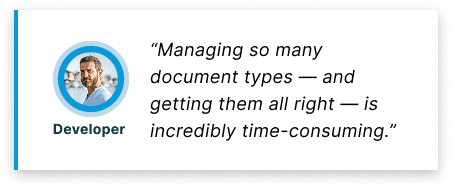
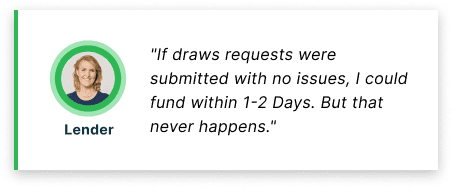
Where Delays and Trust Gaps Begin
Where Delays and Trust Gaps Begin
Guiding Principles
Guiding Principles
Clarity Over Complexity
When AI presents information, it should focus on usability —ensuring insights are easy to understand, reducing cognitive load, and avoiding overwhelming users with data.
Clarity Over Complexity
When AI presents information, it should focus on usability —ensuring insights are easy to understand, reducing cognitive load, and avoiding overwhelming users with data.
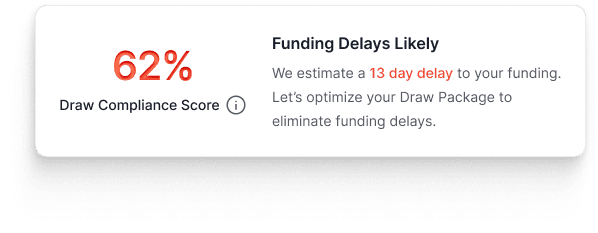
Proactive, Not Reactive
AI should help users prevent errors by highlighting them as they occur.
Proactive, Not Reactive
AI should help users prevent errors by highlighting them as they occur.
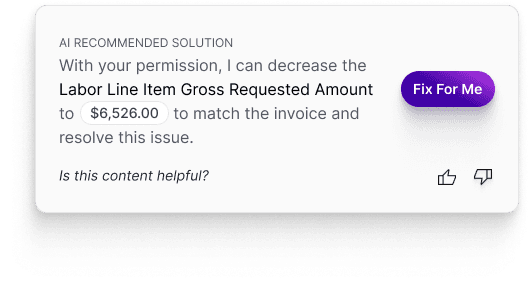
Trust + Transparency
Explain why AI makes certain decisions and to ensure users trust the system’s outputs. It emphasizes explainability, user overrides, and audit trails.
Trust + Transparency
Explain why AI makes certain decisions and to ensure users trust the system’s outputs. It emphasizes explainability, user overrides, and audit trails.
Designing Intentionally with AI
Designing Intentionally with AI
Given the nature of draw-related problems, AI was a natural fit to reduce complexity, surface risks, and streamline decisions.
Where AI Excels
Pattern Detection – Flags mismatches, inconsistencies, and missing data across large sets
Cognitive Offloading – Acts as a copilot, proactively suggesting fixes and reducing user burden
Continuous Learning – Adapts over time to improve recommendations and minimize error rates
Layering in Trust
Clarity – Explain AI recommendations in plain language with transparent reasoning
Control – Enable users to accept, ignore, or override suggestions — all with full audit history
Flexibility – Build trust through adaptable workflows, feedback loops, and continuous learning
Compliance – Ensure accurate draw submissions, accelerating time to funding
Biggest Opportunities Identified:
Document errors and omissions
Missing lien waivers
Misaligned budgets + timelines
Missing or delayed internal approvals
First Up - Documents
Document issues emerged as the most frequent, early-stage risks in the Developer workflow. They created downstream friction, delayed approvals, and undermined trust.
To maximize impact, the prototype focused on resolving document-related risks — where the clearest path to faster funding and trust-building emerged.
Scroll to see the end to end Journey →
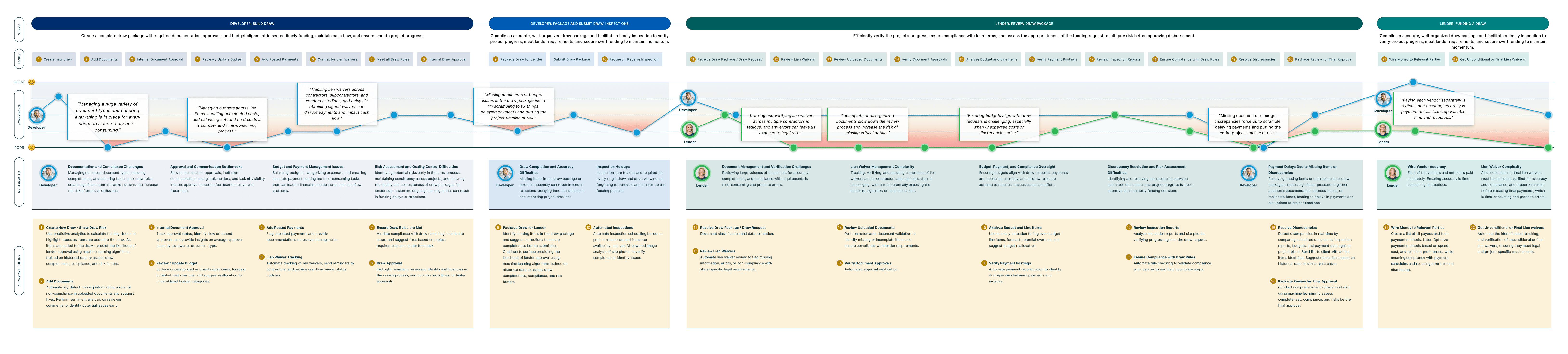
The user journey begins when the Developer creates a draw package and ends when the Lender distributes the requested funds. The map reveals exactly where trust breaks down and funding delays begin.
Where Delays and Trust Gaps Begin
monthly funding cadences
Where Delays and Trust Gaps Begin
monthly funding cadences
The user journey begins when the Developer creates a draw package and ends when the Lender distributes the requested funds. The map reveals exactly where trust breaks down and funding delays begin.
Scroll to see the end to end Journey →
Biggest Opportunities Identified
Document errors and omissions
Missing lien waivers
Misaligned budgets + timelines
Missing or delayed internal approvals
First Up → Documents
Document issues emerged as the most frequent, early-stage risks in the Developer workflow. They created downstream friction, delayed approvals, and undermined trust.
Designing Intentionally with AI
Designing Intentionally with AI
Given the nature of draw-related problems, AI was a natural fit to reduce complexity, surface risks, and streamline decisions.
Where AI Excels
Pattern Detection – Flags mismatches, inconsistencies, and missing data across large sets
Cognitive Offloading – Acts as a copilot, proactively suggesting fixes and reducing user burden
Continuous Learning – Adapts over time to improve recommendations and minimize error rates
Layering in Trust
Clarity – Explain AI recommendations in plain language with transparent reasoning
Control – Enable users to accept, ignore, or override suggestions — all with full audit history
Flexibility – Build trust through adaptable workflows, feedback loops, and continuous learning
Compliance – Ensure accurate draw submissions, accelerating time to funding
Guiding Principles
Guiding Principles
Clarity Over Complexity
When AI presents information, it should focus on usability —ensuring insights are easy to understand, reducing cognitive load, and avoiding overwhelming users with data.
Clarity Over Complexity
When AI presents information, it should focus on usability —ensuring insights are easy to understand, reducing cognitive load, and avoiding overwhelming users with data.
Proactive, Not Reactive
AI should help users prevent errors by highlighting them as they occur.
Proactive, Not Reactive
AI should help users prevent errors by highlighting them as they occur.
Trust + Transparency
Explain why AI makes certain decisions and to ensure users trust the system’s outputs. It emphasizes explainability, user overrides, and audit trails.
Trust + Transparency
Explain why AI makes certain decisions and to ensure users trust the system’s outputs. It emphasizes explainability, user overrides, and audit trails.
UX Design + Key Features
UX Design + Key Features
UX Design + Key Features
There When You Need It
The RiskAdvisor panel is designed to stay out of the way until insight is needed.
There When You Need It
The RiskAdvisor panel is designed to stay out of the way until insight is needed.
There When You Need It
The RiskAdvisor panel is designed to stay out of the way until insight is needed.
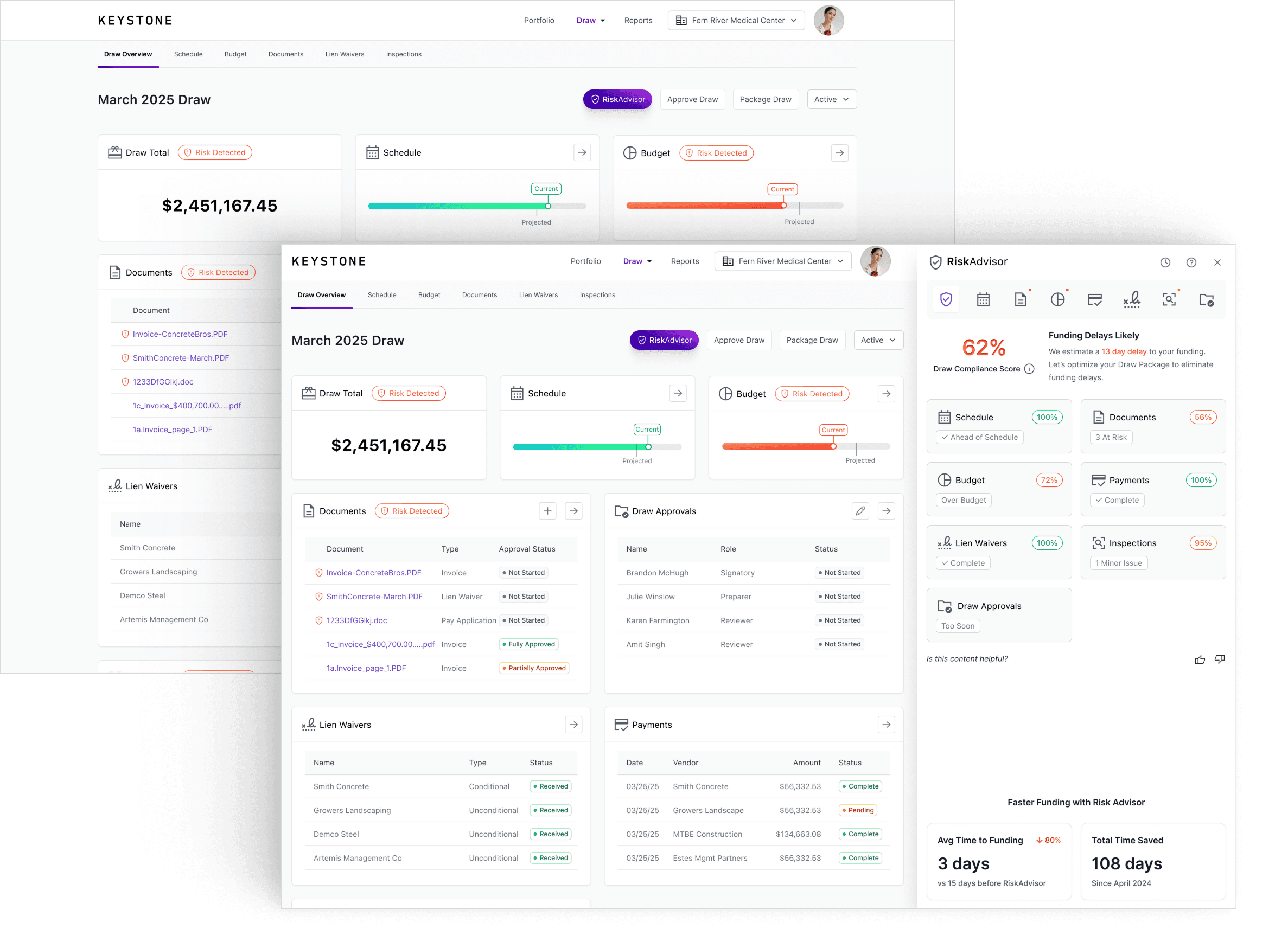
Cohesive Reporting and Resolution
Cohesive Reporting and Resolution
Cohesive Reporting and Resolution
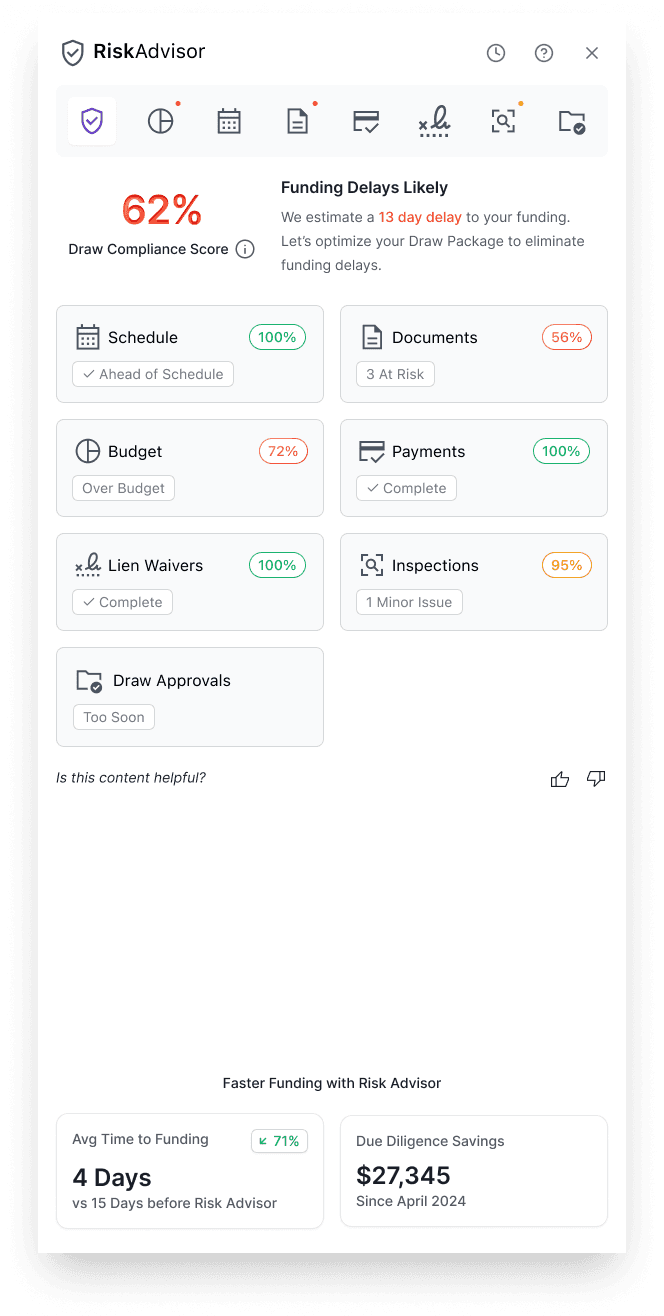
Clarity + Transparency – Scores compliance and surfaces risks that may delay funding
Focus + Control – Highlights issues and provides intuitive navigation to resolve them
Learning + Accountability – Learns from user feedback and lets you review or undo past actions
Issues Highlighted in Context
Issues Highlighted in Context
Issues Highlighted in Context
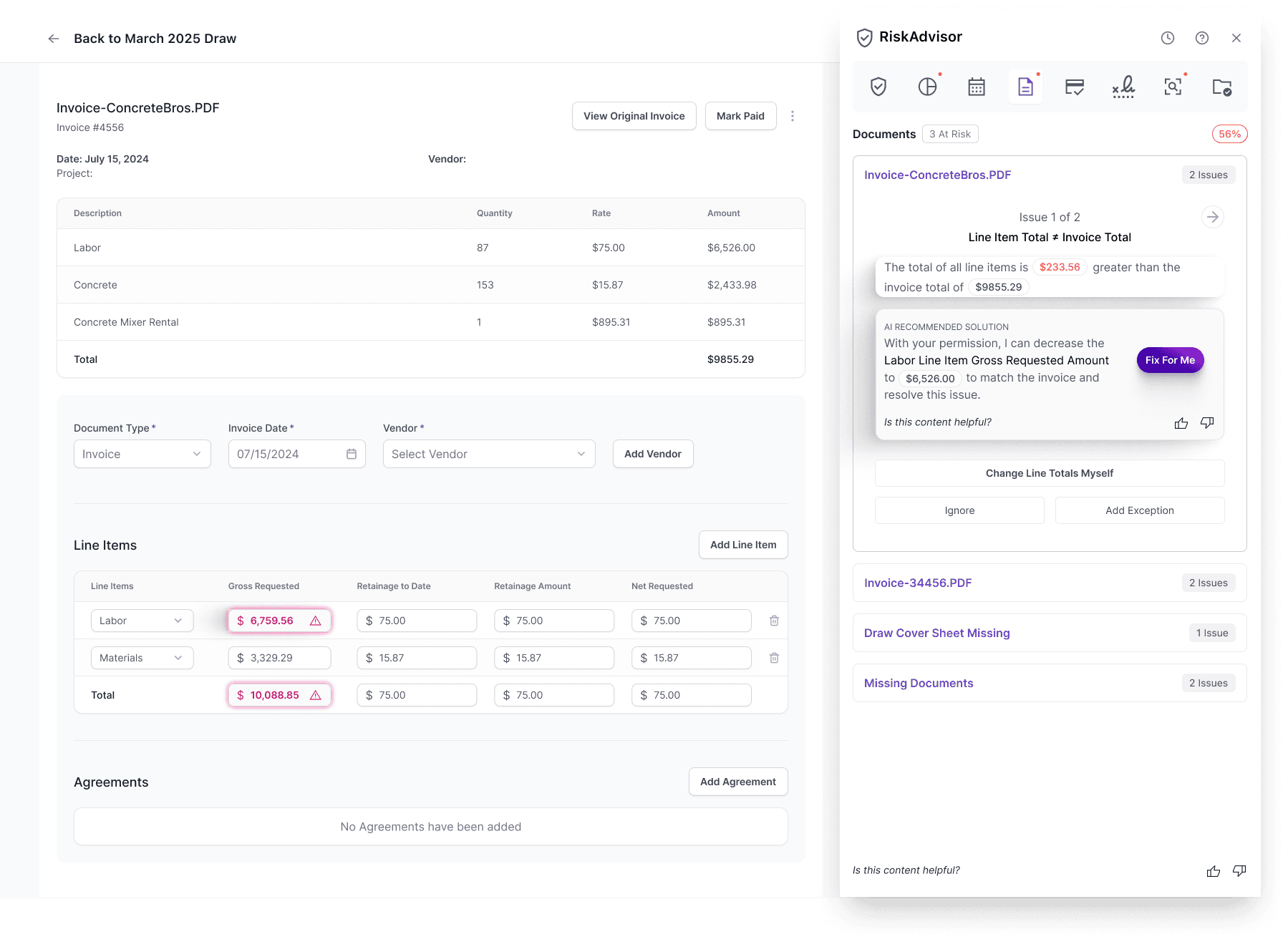
Smart + Precise
Pinpoints discrepancies and highlights the exact amount out of alignmentClear + Actionable
Explains why the issue matters and offers one-click fixes or manual controlUser Confidence
Supports undo, ignore, exceptions, and feedback to maintain trust and flexibility
Build Trust, Triage, Resolve, Learn
A complete AI interaction loop surfaces risks, explains its reasoning, guides resolution, and adapts based on user actions.
Build Trust, Triage, Resolve, Learn
A complete AI interaction loop surfaces risks, explains its reasoning, guides resolution, and adapts based on user actions.
Build Trust, Triage, Resolve, Learn
A complete AI interaction loop surfaces risks, explains its reasoning, guides resolution, and adapts based on user actions.
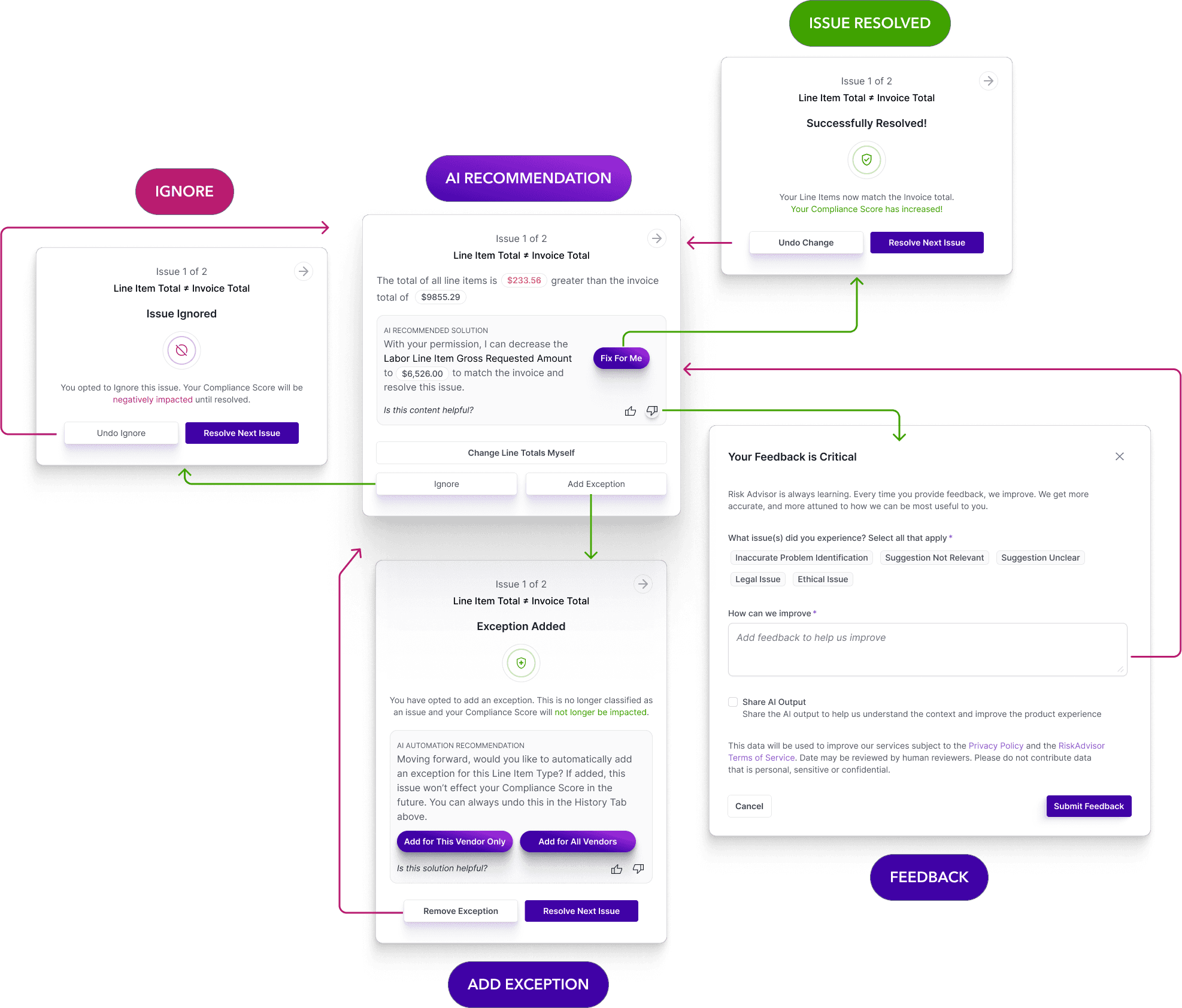
Visual + Verbal Cues
Trust is built through subtle visual and verbal cues. helping users instantly understand what it can do for you, while allowing you to remain in control — reinforcing RiskAdvisor’s role as a copilot, not a black box.
Visual + Verbal Cues
Trust is built through subtle visual and verbal cues. helping users instantly understand what it can do for you, while allowing you to remain in control — reinforcing RiskAdvisor’s role as a copilot, not a black box.
Visual + Verbal Cues
Trust is built through subtle visual and verbal cues. helping users instantly understand what it can do for you, while allowing you to remain in control — reinforcing RiskAdvisor’s role as a copilot, not a black box.
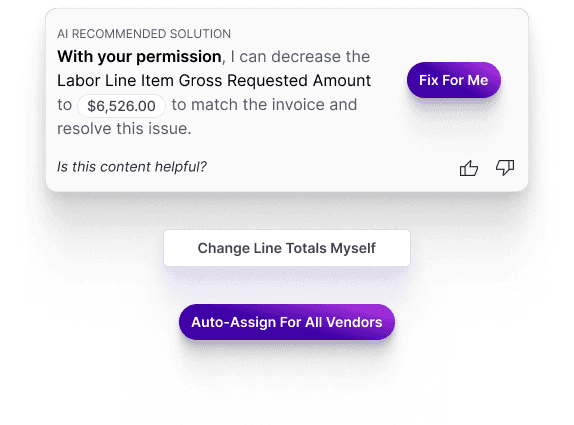
Animations to draw attention to AI driven actions
AI-generated suggestions are clearly labeled with phrases like “Fix For Me”, and "Auto-Assign" , always with a consistent “AI Recommended Solution” tag.
Distinctive rounded buttons with a gradient are only use for AI Actions, to differentiate from user actions.
Language like “With your permission…” and “Would you like to…” reinforces a collaborative tone, never prescriptive.
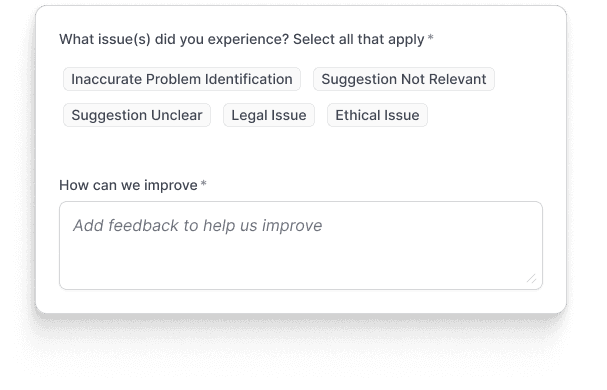
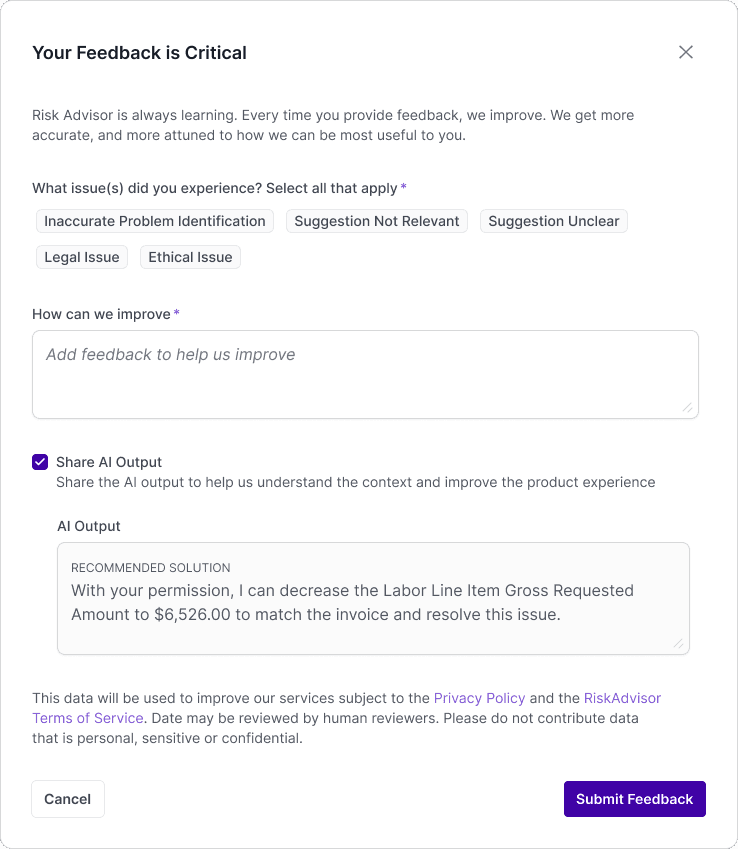
Learning through Feedback
Specific and contextual feedback builds a system that listens, adapts, and earns trust over time.
Learning through Feedback
Specific and contextual feedback builds a system that listens, adapts, and earns trust over time.
Learning through Feedback
Specific and contextual feedback builds a system that listens, adapts, and earns trust over time.
Adoption Challenges
In Designing for AI + Automation
Challenge
UX Solution
Trust in AI Recommendations
Used rationale + audit logs + user control
Over-reliance on Automation
Allow overrides
Unclear AI Decisions
Included explainability: e.g., “Vendor not found in DB”, Ability to provide specific feedback, clearly show AI process and rationale
Too Much Complexity
Insights appear contextually, not all at once (progressive disclosure)
Lender Skepticism
Framed AI as “assistive, not autonomous” — enhancing control, not removing it
Let's talk about your AI Project
Challenge
UX Response
Trust in AI Recommendations
Used rationale + audit logs + user control
Over-reliance on Automation
Provided overrides, confidence levels, exception tags
Unclear AI Decisions
Included explainability: e.g., “Vendor not found in DB”, Ability to provide specific feedback
Too Much Complexity
Insights appear contextually, not all at once (progressive disclosure)
Lender Skepticism
Framed AI as “assistive, not autonomous” — enhancing control, not removing it
Adoption Challenges
In Designing for AI + Automation
Adoption Challenges
In Designing for AI + Automation
Adoption Challenges
In Designing for AI + Automation
Challenge
UX Response
Trust in AI Recommendations
Used rationale + audit logs + user control
Over-reliance on Automation
Provided overrides, confidence levels, exception tags
Unclear AI Decisions
Included explainability: e.g., “Vendor not found in DB”, Ability to provide specific feedback
Too Much Complexity
Insights appear contextually, not all at once (progressive disclosure)
Lender Skepticism
Framed AI as “assistive, not autonomous” — enhancing control, not removing it
© 2025 Atlas Design, LLC. All Rights Reserved. The content on this website may not be reproduced, distributed, or transmitted without the prior written consent of Atlas Design.
© 2025 Atlas Design, LLC. All Rights Reserved. The content on this website may not be reproduced, distributed, or transmitted without the prior written consent of Atlas Design.
© 2025 Atlas Design, LLC. All Rights Reserved. The content on this website may not be reproduced, distributed, or transmitted without the prior written consent of Atlas Design.